• Home
  • About

NO NOTES

Regarding “St. James Infirmary” and other things related to the book “Letters From New Orleans”

Feed on
Posts
Comments

The Rolling Jelly Series: Copyright Issues

July 3, 2006 by nonotes

Some months ago I bought Jelly Roll Morton: The Complete Library of Congress Recordings. This is an eight-CD set, with two books, in a box that’s supposed to look like a piano. Pretty fancy. The material itself has been released in various forms before, many times, for many years. But it was new to me.

I rationalized this expense as a quasi-research item: Hearing Morton talk to Alan Lomax in 1938, about New Orleans in the first fifteen or twenty years of the 20th century, could provide (cough) valuable context for my “St. James Infirmary” project. Of course, Morton never mentions “St. James Infirmary,” which was no surprise — surely somebody would have mentioned it to me by now if he had.

Most of what I’d read about Morton’s conversations with Lomax focuses on his racial attitudes, or on some of his wilder claims about his own role in jazz history, or on his identification of “the Spanish tinge” as a vital element in New Orleans jazz. That’s all fine, but it wasn’t the stuff that caught my attention.

Today I begin a series of posts discussing the things that did catch my attention. I’m thinking I’ll try to do this every Monday, in an open-ended, “rolling” fashion, until I’m done.

The first topic is copyright. Obviously, there’s a “St. James Infirmary” sub-plot on this, since the evidence is pretty strong that this was basically a traditional song when Joe Primrose (Irving Mills) claimed it in the late 1920s.

Morton’s first mention of copyright issues comes relatively early on in his discussions with Lomax. Specifically, he mentions several songs that he wrote around 1905, including “You Can Have It, I Don’t Want it,” and adds: “Of course, I never got any credit for it,” because somebody else claimed it.

Why, Lomax asks, didn’t Morton copyright his tunes back then? Morton replies:

Well, I’ll tell you why we didn’t copyright ‘em … not only me, but a many other. Why the publishers thought they could buy anything they wanted for fifteen, twenty dollars. Well, the fact was that, at that particular time, the sporting houses were all over the country, and you could go in any town. If you was a good piano player, just as soon as you hit town, you had ten jobs waiting for you. So we all made a lot of money, and ten or fifteen or a hundred dollars didn’t mean very much to us during those days….

So the publishers, we didn’t give ‘em anything. So they decided, ‘We know a way to get ‘em.’ So, they — a lot of publishers — would come out with tunes, our melodies, and they would steal ‘em.

But we kept ‘em for our private material. That is to battle each other in battles of music. Battles of music is old, ages old. And of course, if we had the best material, we was considered one of the best men. And of course, the best players always had the best jobs. And the best jobs always meant plenty money.

The subject of publishing comes up a number of times: various songs that were known among musicians to have been written by so-and-so — but somebody else published it. It’s pretty clear that it was a bit of a chaotic time in terms of working out who would get credit for what.

And after all, as much attention as gets focused these days on the transitions of the music business, it’s easy to forget the transitions that it has gone through before. In the first decades of the 20th century, who really knew how important publishing rights to various jazz and blues numbers would be? From about 1904 onward Morton was a peripatetic guy, and tells stories of piano battles and other adventures everywhere from Alabama and Mississippi and Texas to St. Louis, Chicago, Detroit, New York, Los Angeles. It was, no doubt, an economically sound decision to avoid the publishers to keep songs secret to protect the business interests of the traveling piano player in the early 20th century — economically sound, that is, in the short term.

And there’s one other element of Morton’s discussions of this issue that’s worth note, I think: He never really talks about anything as being “traditional,” per se. That is, for any given tune, he pretty much always produces a name of somebody who actually wrote it, whether it’s him, or Buddy Bolden, or whoever. In some cases, it seems that Morton is guilty of overly aggressive credit-claiming, too. For instance, he says he composed “Tiger Rag” — not (as Lomax noted) a very credible authorship claim.

Point is, it seems that it’s not that Morton didn’t believe in the idea of authorship. It’s just that he doesn’t seem to take seriously the link between authorship and whoever’s name was attached to the published version of the song.

And certainly by the time he sat down to talk to Lomax, Morton seen the way that economics and musical authorship intersect change quite a bit from the days of battling rival piano players in “sporting houses.” As Lomax later wrote in Mister Jelly Roll, by the 1920s, Morton was figuring out that “it was more profitable to publish and own music than it was to compose or play it.”

Indeed.

Part Two –>

Posted in Intellectual property, Musical context, New Orleans, The Rolling Jelly Series | No Comments

Comments are closed.

  • "St. James Infirmary"

    [Or: The Point of this Site]

    A couple of years ago I did some research into the song "St. James Infirmary," wrote up what I found, emailed that essay to friends and posted it on my web site (as part of a series of "Letters From New Orleans," as I was living in that city at the time). Based on the feedback, I wrote a second version of the essay, and asked for more feedback. Based on that, I wrote a third version.

    And now, this site: A place to collect some of the links, leads, thoughts, and suggestions relating to the song that readers (from Finland, The Netherlands, Australia, Spain, England, Sweden, Canada, and all over the U.S.) have sent me. This may lead to a fourth and significantly expanded version of the essay, some day. Also on this site: Plenty of tangents.

    Never heard "St. James Infirmary"? Start here.

  • The Essay

    gambit-cover.jpg

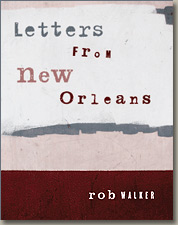
    The most recent version of my "St. James Infirmary" essay is now a few years old. But it's still a fairly decent overview of what I know about the song, and why I'm interested in it. You can read it either in the book Letters from New Orleans (see below), or in the archives of The Gambit, the New Orleans weekly that published the piece as a book excerpt when LfNO came out.

  • Podcast!

    In November 2007 I was invited to do an all-"SJI" episode of the outstanding Podcast The Sounds In My Head. My episode is here. Post about it (with playlist, so, you know, spoiler alert) is here.
  • Categories

    • "St. James Infirmary"
    • 1. St. James (+ Tangents)
    • Announcements
    • Antecedents and Variations
    • Friends
    • In performance
    • Intellectual property
    • Irving Mills/Joe Primrose
    • Letters From New Orleans book
    • Lyric deconstruction
    • MLK BLVD
    • Movies & Television
    • Musical context
    • MySpace/YouTube/Etc.
    • New Orleans
    • Non-musical context
    • One song / one album
    • Other Music +
    • Public Housing
    • Q&As
    • Questions (and sometimes answers)
    • St. James +
    • St. James Infirmary (the building)
    • Thanks
    • The Hot 8
    • The Rolling Jelly Series
    • The Thing Itself
    • Uncategorized
    • Versions
  • The Book

    This site is a partial spinoff of the book Letters from New Orleans, published by the unstoppable Garrett County Press. My interest in "St. James Infirmary" is the subject of one essay in the book. All author proceeds from the book still go to post-Katrina relief efforts, so I think it's okay for me to say: You ought to buy it.

  • Mailing List

    For (very) sporadic site updates and other news via email, visit this page.

  • 1. St. James (+ Tangents)

    • * Betty Boop cartoon with Cab Calloway’s version of “St. James Infirmary.”
    • * Dutch radio broadcast featuring many versions of “S.J.I.” Part One.
    • * Dutch radio broadcast featuring many versions of “S.J.I.” Part Two
    • * Irving Mills overview via The Red Hot Jazz Archive
    • * Metafilter August 2005 “Streets of Laredo” discussion
    • * Metafilter June 2004 “St. James” discussion
    • * Mudcat discussion
    • * Tablature
    • * The Hot 8: The band I heard play “St. James Infirmary” in the late 1990s
    • * The Unfortunate Rake collection on Smithsonian Folkways Recordings
    • * The Unfortunate Rake lyrics
    • * Transcript of S.N.L. with Lilly Tomlin singing “St. James Infirmary.”
    • * Unfortunate Lass lyrics
    • * Wikipedia entry
  • 2. Other Music (+ So On)

    • Alan Lomax Stuff
    • Disquiet
    • Downtown Soulville with Mr. Fine Wine
    • Folkways Smithsonian
    • Gary Giddins Essay on Louis Armstrong
    • Give the Drummer Some
    • Home of the Groove
    • Music of New Orleans: Music of the Streets; Music of Mardi Gras
    • Myshkin’s Ruby Warblers
    • Negrospirituals.com
    • The American Folklife Center
    • The Florida Folklife Collection
    • The Red Hot Jazz Archive
    • The Sounds In My Head
    • WBGO
    • WWOZ
  • 3. New Orleans (+ Like That)

    • “Class-ifying the Hurricane,” by Adolph Reed Jr.
    • * Why America Needs a City Right Where New Orleans Is
    • Basin Street Records
    • Culture Gulf
    • Katrina & post-Katrina shots by our friend, photographer Charles Franklin
    • Louisiana Music Factory
    • Washing Away
  • Versions

    I either own or am familiar with a bunch of versions of S.J.I. and close variations by a variety of artists. Here's a list, in progress. For now I'm concentrating on SJI, rather than its folk antecedents or any of the "Streets of Laredo" thread. Title is "St. James Infirmary" or "St. James Infirmary Blues" unless otherwise noted:


    A - B -C

  • Henry "Red" Allen
  • The Animals
  • Louis Armstrong (more than once, but the 1928 version is the one I'm partial to)

  • James "Iron Head" Baker ("St. James Hospital;" a Lomax field recording)
  • Danny Barker
  • Count Basie
  • Bethany & Rufus
  • Bobby "Blue" Bland
  • James Booker
  • Brothers Four
  • Peter Brötzmann/Die Like a Dog

  • Cab Calloway
  • Isobel Campbell and Mark Lanegan
  • Big Al Carson / The Magnificent Sevenths
  • Eric Clapton and Dr. John (live)
  • Joe Cocker
  • Ray Condo
  • Harry Connick Jr.
  • J. Lawrence Cook
  • Scatman Crothers

  • D-E-F

  • Joe Dassin
  • Herman Davis ("Barroom Blues")
  • The Doors

  • Snooks Eaglin
  • Ramblin' Jack Elliot

  • Bob French's Original Tuxedo Jazz Band & Friends

  • G-H-I

  • Michael Galasso ("Blue"), an amazing piece.
  • Red Garland (a nice one)
  • Errol Garner
  • Benny Goodman
  • Arlo Guthrie

  • Hall Johnson Negro Choir
  • Harlem Hot Chocolates
  • Alex Hill and His Orchestra
  • Earl Hines
  • Mattie Hite ("St. Joe's Infirmary")
  • Toshiyuki Honda
  • The Hokum Boys ("Gamber's Blues," two excellent takes)

  • J-K-L

  • Janis Joplin (mentioned to me by multiple people; I don't have it)
  • Dr. John ("Touro Infirmary")
  • Tom Jones

  • Kansas City Frank and his Footwarmers
  • Johnny Kendall & The Heralds (I'm told this was huge in The Netherlands in the 1960s)
  • Stan Kenton (twice, I think, one of those as "Gambler's Blues")
  • Chris Thomas King
  • Spider John Koerner

  • George E. Lee and his Novelty Singing Orchestra
  • Limelighters

  • M-N-O

  • Colette Magny
  • The Main Squeeze Orchestra
  • Roger McGuinn
  • Blind Willie McTell (as "Dyin' Crapshooters Blues," in 1942 and 1956; I prefer the latter)
  • Irving Mills and His Hotsy Tosty Gang
  • Van Morrison

  • (Mystic Knights of) Oingo Boingo
  • King Oliver
  • Kid Ory

  • P-Q-R

  • Moses "Clear Rock" Platt. ("St. James Hospital," a Lomax field recording)
  • Preservation Hall Jazz Band
  • Hot Lips Paige
  • Perez Prado

  • Lou Rawls
  • Della Reese
  • Marc Ribot (Solo guitar instrumental; one of my favorites)
  • Jimmie Rodgers ("Those Gamblers' Blues," one of my very favorites; "Gambling Barrooom Blues" is similar)
  • Kermit Ruffins

  • S-T-U

  • Artie Shaw
  • Archie Shepp
  • Ezra Sims ("Sextet")
  • Sin the Tik
  • Jimmy Smith
  • Snakefarm
  • James Solbere
  • Pete Special/Old Town School of Folk
  • Standells
  • Jack Teagarden (at least two versions)
  • Alphonso Trent and his Orchestra
  • Triffids

  • V-W-X-Y-Z

    Dave Van Ronk

  • Dr. Richard Watson
  • Josh White
  • The White Stripes
  • Fess Williams and His Royal Flush Orchestra ("Gambler's Blues")
  • Jackie Wilson
  • Marva Wright

  • The Ventures

  • Frank Zappa ("Ain't Necessarily the St. James Infirmary Blues," a pretty cool take)

Blog at WordPress.com. | Theme: Mistylook by Sadish.